As the month of Nisan continues, the story of Passover reminds us that freedom is not only personal — it is communal. The Exodus from Egypt is told as the journey of an entire people, not just individuals. No one leaves alone. Families, neighbors, and strangers all walk together toward liberation. Because of this, the season of Passover asks us not only to reflect on our own freedom, but also to notice where we can help others feel less alone, less burdened, and more able to move forward.
Jewish tradition teaches that the work of redemption happens through mitzvot — small acts of care, responsibility, and kindness that help repair the world around us. In Nisan, the month of liberation, these acts take on special meaning. When we help someone carry what feels heavy, when we listen with patience, when we make space for another person to belong, we help widen the path toward freedom.
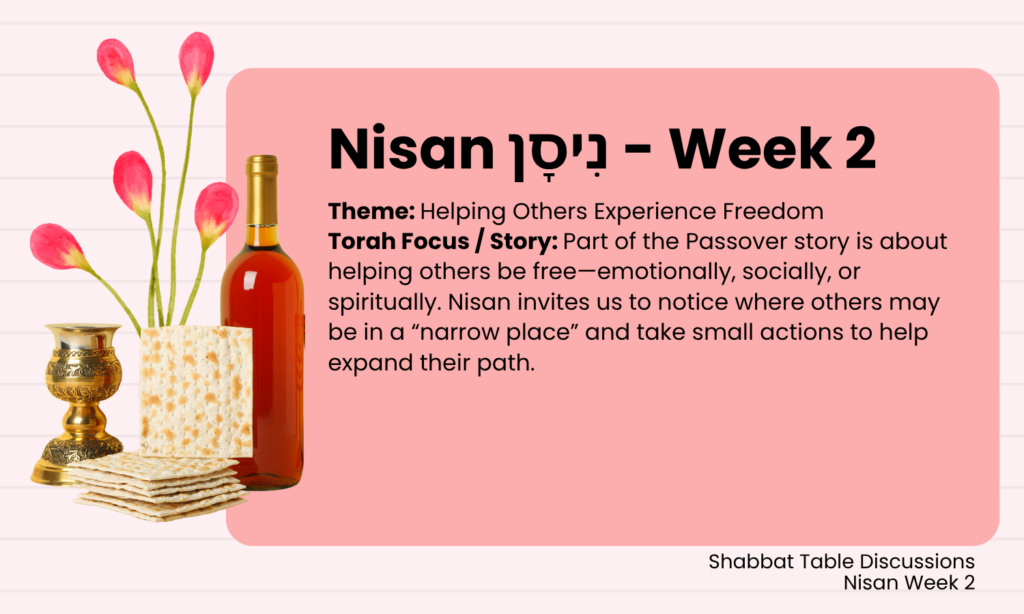
The Hebrew name for Egypt, Mitzrayim, can be understood as meaning “a narrow place.” The Exodus story is not only about leaving a physical land, but about moving from constriction into openness. Each generation faces its own narrow places — moments of fear, loneliness, grief, or uncertainty. Sometimes the path out does not open all at once. Sometimes it widens because someone else reaches out a hand.
Passover reminds us that liberation grows through connection. A meal shared, a call made, an invitation offered, or a simple act of generosity can help another person feel less confined. These small mitzvot may not seem dramatic, but they are part of the same story we tell at the Seder: the story of people helping one another walk toward freedom.
During this second week of Nisan, we are invited to notice where we can bring a little more openness into the world — where we can ease someone’s burden, include someone who feels left out, or offer support without being asked. In doing so, we continue the work of the Exodus in our own time.
Shabbat Table Questions for this Week
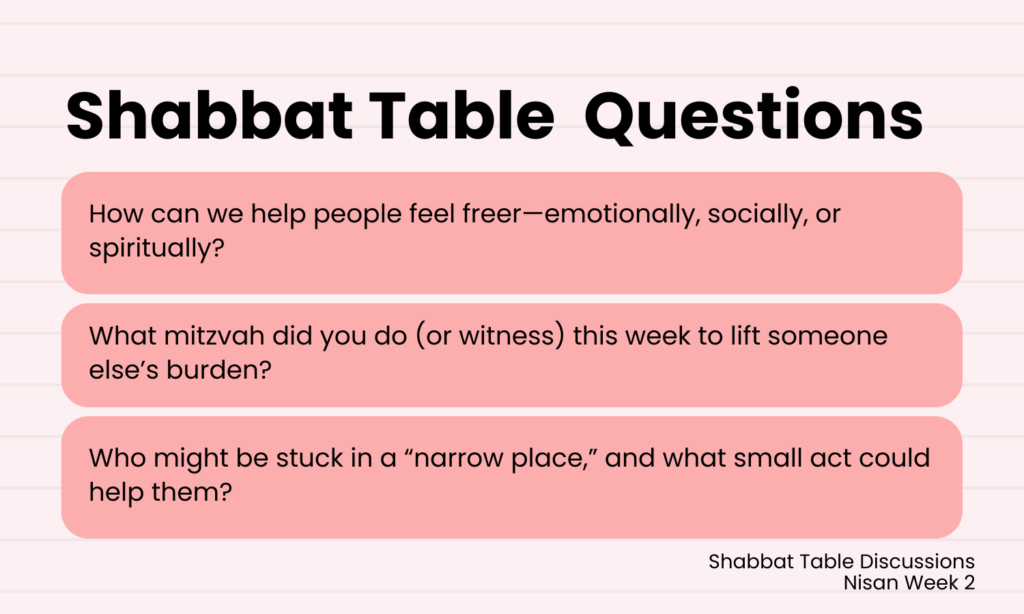
- Part of the Passover story is about helping others be free. How can we help people feel freer — emotionally, socially, or spiritually?
- What’s one mitzvah you did (or witnessed) this week that helped lift a burden for someone else?
- Think about someone who might be stuck in a “narrow place” (the Hebrew word for Egypt, Mitzrayim, means “narrow place”). What’s one small thing you could do to help widen their path?